
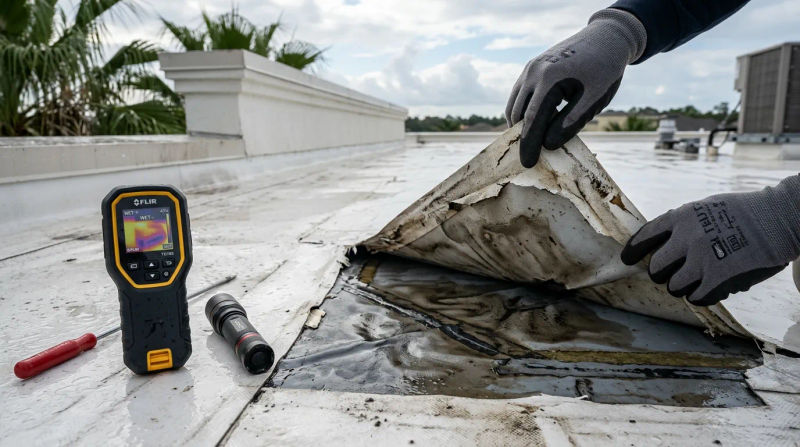
The sky is finally clear over Nocatee, and the storm has passed. As a commercial property owner, you’ve checked the windows, cleared debris from the parking lot, and confirmed the power is on. But what about the one part of your building that took the brunt of the hurricane-force winds and torrential rain? Your roof. It might look fine from the ground, but unseen damage can be lurking, waiting to cause major disruptions to your business. October is a critical window for assessment; the break in weather allows us to spot issues like trapped moisture and subtle uplift before they escalate into catastrophic failures.
From my 12 years of experience with coastal Florida weather, I’ve seen how quickly minor post-storm issues can spiral. For commercial properties, especially the modern structures common in Nocatee, a compromised roof doesn't just mean a leak - it can mean damaged inventory, operational downtime, and complex structural repairs. Understanding the warning signs is the first step in protecting your investment.
Common Signs and Symptoms
After a significant weather event, a thorough visual inspection from the ground is a good start, but the most telling signs are often on the roof itself. Our technicians are trained to identify these subtle but critical indicators of failure. Here are seven key things we look for that often signal the need for a commercial roof replacement.
- Membrane Uplift or Pulling Away: Look at the edges and corners of your roof. Do you see areas where the roof membrane appears to be lifting, peeling back, or bubbling up like a loose sticker? These are classic post-hurricane roof uplift signs Nocatee property owners must watch for. This happens when extreme wind creates a powerful suction effect on the roof surface, weakening the bonds that hold the membrane down.
- Widespread Blistering: On flat or low-slope roofs, you might notice raised, bubble-like formations on the surface. These are not just cosmetic flaws. These are telltale flat roof membrane blistering symptoms, indicating that moisture has gotten trapped between the layers of the roofing material.
- Significant Ponding Water: A commercial roof is designed to drain efficiently. If you see large pools of water that remain on the roof for more than 48 hours after a storm, it’s a red flag. This “ponding” indicates a problem with the drainage system or a sag in the roof structure itself.
- New Interior Water Stains: This is often the first sign a business owner notices. Brown or yellow stains on ceiling tiles, discoloration on walls, or visible drips are direct evidence of a roof leak. It’s crucial to identify the exterior source, as these are primary commercial roof interior staining causes.
- Damaged or Loose Flashing: Flashing is the metal material installed around rooftop penetrations like HVAC units, vents, pipes, and skylights. If this material is bent, detached, or missing, it creates a direct path for water to enter your building.
- Punctures, Tears, or Gouges: Flying debris is a major threat during a hurricane. Even small branches or signs can become projectiles capable of puncturing or tearing the roof membrane, compromising its waterproofing capability instantly.
- Clogged Drains, Scuppers, and Gutters: Storms wash a massive amount of leaves, branches, and other debris onto roofs. If your drainage systems are blocked, water has nowhere to go. It will back up, adding immense weight to the structure and finding any available weakness to exploit.
What Causes This Problem
Understanding the forces at play during a hurricane helps explain why these symptoms are so serious. The damage isn't just about rain; it's about physics.
- Wind Uplift Pressure: The most significant force on a commercial roof during a hurricane isn't the wind pushing down on it, but the negative pressure (or suction) pulling up. As high-velocity wind moves over the flat surface of the roof, it creates a vacuum effect, similar to an airplane wing. This force is strongest at the corners and edges, which is why we often see the membrane peeling away there first. If the membrane's adhesion is compromised, the entire system can fail.
- Trapped Moisture and Vapor Drive: Small punctures or failed seams allow wind-driven rain to be forced underneath the membrane. When the sun comes out, it heats the roof surface, causing this trapped moisture to turn into water vapor. This vapor expands, creating pressure from within that results in the blisters and bubbles you see on the surface. Each blister is a potential future leak.
- Structural Strain: Ponding water is incredibly heavy - water weighs about 5.2 pounds per square foot for every inch of depth. A large area of ponding water can place thousands of pounds of stress on your roof deck and the building's structural supports, leading to sagging and, in worst-case scenarios, collapse. The modern buildings in Nocatee, though built to high standards, are not designed to support this kind of sustained load.
- Debris Impact: The cause here is straightforward. Debris propelled by 100+ mph winds acts like a battering ram. It can puncture even the most robust roofing membranes, creating immediate entry points for water.
Ultimately, these issues work together. A small uplift at the edge allows water in, which leads to blistering, which weakens the membrane further, making it more susceptible to future wind events. This cascading failure is why a comprehensive commercial roof replacement is often the only long-term solution after severe storm damage.
When to Call a Professional
It can be tempting to ignore small signs or attempt a quick patch, but with roofing, this approach often leads to bigger, more expensive problems. Safety is the number one priority - never get on a roof yourself, especially after a storm when its structural integrity may be compromised.
You should call an experienced professional for an evaluation if you notice:
- Any signs of membrane uplift or detachment. This is not a DIY fix. It indicates a systemic failure of the roof's adhesion that requires a professional assessment.
- More than a few isolated blisters. While one or two small blisters might be repairable, widespread blistering suggests a systemic moisture problem beneath the membrane. Patching them one by one is like playing whack-a-mole; the underlying issue remains.
- Ponding water that doesn't evaporate. This points to a fundamental drainage or structural issue that a simple patch cannot solve.
- Visible damage to flashing or multiple punctures. These are critical waterproofing details. Improperly repaired flashing is one of the most common causes of persistent leaks.
Our technicians use a standardized process to diagnose these issues. This often includes a core sample analysis to check for moisture saturation in the underlying insulation and substrate, as well as infrared thermography to map hidden moisture that isn't visible to the naked eye. This level of detail ensures we can confidently determine whether a targeted repair is sufficient or if a full replacement is the most durable and cost-effective path forward. A professional report is also essential for navigating the insurance claim process effectively.
Conclusion
After a hurricane, the safety of your business, employees, and inventory depends on the integrity of your roof. While modern commercial buildings in Nocatee are resilient, they are not invincible. Be vigilant for the key warning signs: membrane uplift, widespread blistering, ponding water, and interior staining. These aren't just cosmetic issues; they are symptoms of a compromised roofing system that has been pushed beyond its limits.
Waiting to address these problems allows trapped water to cause rot, mold, and structural decay, turning a roofing issue into a building-wide crisis. Acting quickly during the post-storm window in October can save you from costly downtime and emergency repairs down the road.
If you notice any of these signs on your commercial property, contact a local, qualified roofing professional for a thorough inspection.