

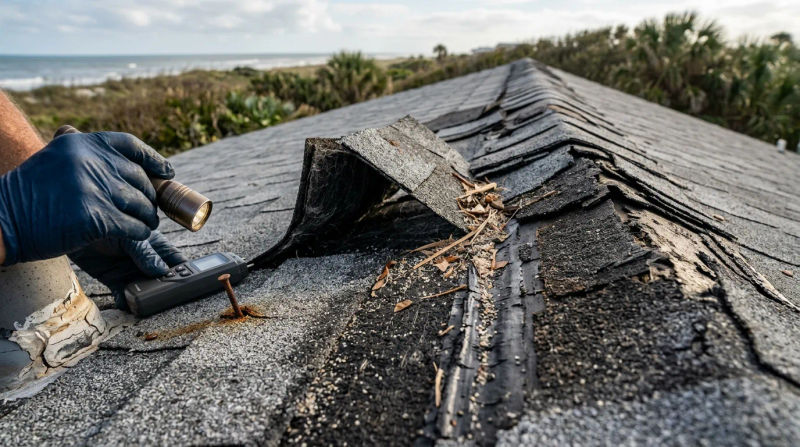
The last big storm passed weeks ago, and you breathed a sigh of relief. Your Marineland home seemed to have weathered it just fine. But now, as we move deeper into October, you notice a faint, discolored spot on the ceiling in the guest room. It’s small, but it wasn’t there before. This is a scenario I’ve seen play out countless times along the coast. My name is Caleb Martinez, and for over 12 years, I’ve been installing and repairing roofs on homes from St. Augustine Beach down to our unique barrier island communities. I’ve learned that the most significant hurricane roof damage often doesn’t announce itself with a sudden crash; it reveals itself slowly, through subtle signs that appear long after the winds have died down.
That delayed leak is your roof’s way of telling you that the storm caused more stress than you thought. For homeowners here, understanding these warning signs is critical to preventing a small issue from becoming a catastrophic failure.
Common Signs and Symptoms
After a storm, it’s natural to do a quick visual check from the ground. But comprehensive damage assessment requires a closer, more detailed look. Our trained crews follow a standardized process to identify issues that are often invisible to the untrained eye. Here are seven key indicators that your roof may have sustained damage significant enough to warrant a replacement.
- Lifted, Curled, or Missing Shingles: This is the most obvious sign. High winds can get underneath the edge of a shingle, breaking the seal and lifting it. Once lifted, it rarely seals back down properly, creating a direct path for water. Look for shingles that are flapping, have curled edges, or are missing entirely.
- Significant Granule Loss: Those sand-like particles you see in your gutters or on the ground after a storm are the protective granules from your asphalt shingles. They shield the underlying asphalt from UV rays. A major loss of granules exposes the shingle to the sun, causing it to become brittle and fail prematurely. This is a clear sign of storm-related impact and wear.
- Creases or Cracks in Shingles: Look for horizontal lines or cracks where shingles may have been bent back by the wind but didn’t completely tear off. This crease represents a weak point that will eventually crack and allow water intrusion. It’s a tell-tale sign of severe wind stress.
- Dented or Punctured Surfaces: Flying debris is a major threat during a hurricane. Even small branches can impact your roof with enough force to dent metal panels, crack tiles, or puncture the surface of a shingle or roof membrane. These impact marks compromise the roof's water-shedding capabilities.
- Interior Water Stains: That spot on your ceiling is the final symptom of a problem that started weeks ago. Water has already penetrated the roofing material, the underlayment, and the roof deck, and is now soaking into your drywall. By the time you see it, the damage is already well underway.
- Membrane Uplift and Seam Separation: Many coastal homes feature flat or low-slope roof sections over porches, garages, or additions. These are often covered with a single-ply membrane. High winds create a powerful suction effect that can cause retail roof uplift seam separation - a term we use for when the wind pulls the membrane away from the roof deck, often starting at the seams. Look for bubbles, wrinkles, or visible gaps where sealed seams have pulled apart. These are critical Marineland roof membrane damage signs that require immediate attention.
- Damaged Flashing and Seals: The most vulnerable points on any roof are the penetrations: vents, chimneys, skylights, and valleys. Check the metal flashing and sealant around these areas for signs of lifting, dents, or broken seals. Wind-driven rain is exceptionally good at finding its way into these compromised spots.
While you assess the damage, it's crucial to know how to document roof storm damage photos. Use your phone to take pictures from multiple angles - wide shots to show the overall area and close-ups of specific damage points. Good documentation is invaluable for insurance claims.
What Causes This Problem
The roofing systems on our barrier island homes face a unique combination of forces. It isn't just one thing, but a relentless assault from multiple angles.
First, there's wind uplift. When hurricane-force winds blow over your roof, they create a pressure difference, with lower pressure above the roof and higher pressure inside the attic. This acts like a giant vacuum, trying to lift the entire roof system off the structure. It’s this force that pries up shingles, breaks seals, and causes membrane bubbling.
Second is wind-driven rain. During a storm, rain doesn't fall vertically; it’s blasted sideways at high speeds. This water is forced into tiny, imperceptible cracks and crevices that would normally pose no threat. It gets pushed up and under flashing, between shingle laps, and through any small tear or puncture.
Finally, there's the cumulative effect of our coastal environment. The intense Florida sun bakes roofing materials, making them brittle over time. The salt air can corrode metal fasteners and flashing. A roof that is already weakened by years of exposure is far more susceptible to catastrophic failure when a major storm hits. The hurricane roof damage we see is often the final blow to a system that was already under stress.
When to Call a Professional
While a ground-level inspection and taking photos are great first steps, determining the true extent of the damage requires expertise. Getting on a potentially compromised roof is extremely dangerous, especially if there is hidden structural damage or wet, slippery surfaces.
A few missing shingles might seem like a simple repair, but they could be a symptom of widespread seal failure across the entire roof. This is where professional assessment is non-negotiable. Our technicians are trained to identify not just the obvious damage, but the subtle, systemic issues that indicate the roof’s integrity as a whole has been compromised. We can assess the condition of the underlayment and decking - layers you can't see - to determine if a simple patch will suffice or if a full re-roof is necessary to protect your home long-term.
An experienced professional can differentiate between isolated, repairable damage and a pattern of failure that points to the end of the roof's service life. They provide the detailed evaluation and documentation needed for insurance claims and help you understand your options, ensuring you make an informed decision rather than a quick fix that could fail next season.
Conclusion
After a hurricane, the absence of an immediate, obvious leak can create a false sense of security. But as we've seen, the most common signs of critical damage - like lifted shingles, granule loss, and membrane uplift - are often subtle and their consequences delayed. That small water stain appearing in October is a critical warning sign that the storm's impact was more severe than you realized.
Don't wait for a small stain to become a major interior problem. Taking a proactive approach now can save you from repeated disruptions, costly interior repairs, and the stress of another storm season with a compromised roof. It’s about securing your home and your peace of mind.
If you notice any of these signs, contact a local roofing professional for an inspection.