

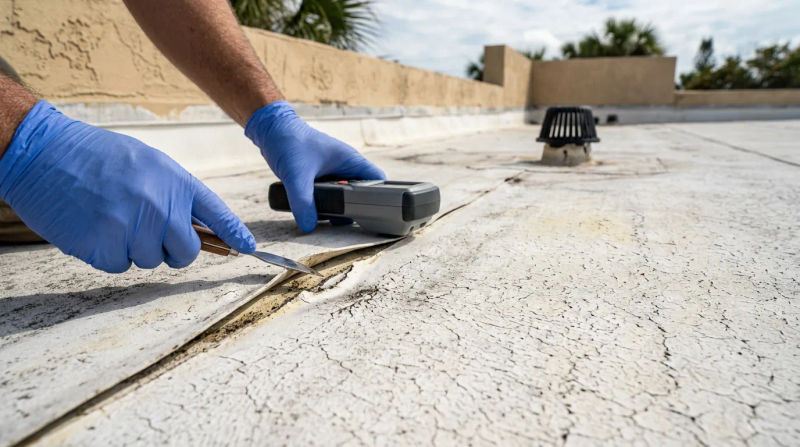
After a long, hot Florida summer and another hurricane season in the books, you might be looking at your commercial property's roof and wondering what the intense sun and storms have left behind. As a roofing specialist who has worked on properties up and down St. Augustine Beach for over a decade, I’ve seen firsthand how our unique coastal environment can take a toll, especially on low-slope or flat roof membranes. You might notice a subtle chalky film, or maybe a seam that looks just a little wider than it did last year. These small signs are often the first warnings of bigger problems to come, and October is the perfect time to assess them before the winter rains arrive.
Here in Butler Beach, the combination of relentless sun, salty air, and wind-driven rain creates a uniquely challenging environment for roofing materials. Understanding what to look for can help you catch issues early and avoid costly emergency repairs down the line.
Common Signs and Symptoms
Regular visual inspections are the most effective way to monitor the health of your roof membrane. From a safe vantage point, you can often spot the early indicators of UV membrane damage. We've developed a mental checklist over the years that our technicians use for initial assessments, and it’s something any property owner can use. This Butler Beach retail roof membrane checklist focuses on the most common failure points.
- Surface Cracking or “Alligatoring”: Does the surface of the membrane have a pattern of fine cracks that resemble alligator skin? This is a classic sign of a brittle, UV-damaged material that has lost its flexibility. The protective top layer has worn away, exposing the core material to the elements.
- Chalking or Fading: Run your hand over the membrane surface. If it leaves a dusty, chalk-like residue, the material is oxidizing and breaking down. Significant color fading is another indicator that UV rays are degrading the membrane’s chemical structure.
- Blistering or Bubbling: Trapped moisture or air can heat up and expand, causing blisters or bubbles to form on the roof surface. While a small blister may not be an immediate threat, large or numerous blisters indicate a potential adhesion failure and a future leak point.
- Shrinkage and Pulling: Look closely at the roof's perimeter, as well as around vents, pipes, and HVAC curbs. A shrinking membrane will pull away from these flashings, creating gaps where water can easily penetrate. This tension is a leading cause of seam failure.
- Splitting Seams: This is one of the most critical issues to watch for. The seams where sections of the membrane are welded or adhered together are often the first points of failure. Look for signs of separation, cracking along the seam edge, or sealant that is peeling away. This is a direct pathway for water intrusion.
What Causes This Problem
Understanding why these problems occur helps in appreciating the importance of proactive maintenance. The issues you see on the surface are symptoms of deeper environmental stresses attacking your roof system every day.
First and foremost is the sun. The constant bombardment of ultraviolet radiation breaks down the plasticizers and polymers that give roofing membranes their flexibility and durability. This process of photodegradation is what leads to brittleness, cracking, and eventual failure. It's the primary driver behind UV seam splitting on low-slope roofs, as the constant expansion and contraction of a brittle membrane puts immense stress on these bonded areas.
Our coastal location significantly compounds this issue. It's a fact that salt air accelerates roof membrane aging. The aerosolized salt from the ocean is corrosive and slowly degrades roofing materials, fasteners, and flashings. This is particularly true for properties on a barrier island like ours in Butler Beach. What might be a 20-year roof system inland may have a significantly shorter effective lifespan here without proper care.
Thermal cycling also plays a major role. The intense Florida heat causes the roof membrane to expand during the day, and it contracts as it cools overnight. This constant movement puts a strain on the entire system, especially the seams. Over thousands of cycles, this stress can weaken the bonds and lead to separation.
Finally, we can't ignore the impact of severe weather. Wind-driven rain during tropical storms or hurricanes forces water into any tiny crack or pinhole, turning a minor issue into a major leak. High winds can also cause "wind uplift," where the membrane is pulled away from the roof deck, leading to widespread failure.
When to Call a Professional
While a visual check from the ground or a safe access point is a great first step, diagnosing the severity of these issues requires expertise. Knowing when to call for a professional assessment can save you from causing more damage or misinterpreting a critical symptom.
A visual inspection is something you can do yourself. Taking photos of concerning areas can be incredibly helpful when you do decide to call an expert. Note any ponding water that remains for more than 48 hours after rain, as this indicates a drainage problem that will accelerate membrane degradation.
You should call for a professional inspection if you notice any of the following:
- Visible Seam Splitting: Any separation at the seams is a red flag that warrants immediate attention. This is not a DIY repair; improper patching can trap moisture and make the problem worse.
- Extensive Cracking or Blistering: If you see widespread alligatoring or multiple large blisters, it's a sign the membrane is nearing the end of its service life. An experienced professional can determine if a repair is feasible or if a replacement is the more cost-effective solution.
- After a Major Storm: Following any hurricane or significant tropical storm, it's wise to have a professional inspection. They are trained to spot subtle damage from wind uplift or debris that may not be obvious to the untrained eye.
- Your Roof is Over 10 Years Old: Even if it looks okay, a roof membrane's performance can decline significantly with age. A professional can perform core sampling and other diagnostic tests to assess its remaining lifespan.
Attempting to walk on a sun-baked, brittle roof can cause further damage and is a significant safety risk. Our trained technicians use specific tools and safety protocols to thoroughly evaluate the entire roofing system without compromising its integrity.
Conclusion
Protecting your commercial property starts with understanding the unique challenges posed by our Butler Beach environment. The intense sun and corrosive salt air are relentless, but their effects can be managed with proactive attention. By regularly checking for key signs like cracking, shrinkage, and especially seam splitting, you can catch UV membrane damage before it leads to disruptive leaks and interior damage.
Don't wait for a water stain to appear on your ceiling. Taking a few minutes this fall to inspect your roof - especially after the summer heat - is one of the smartest investments you can make in your property. Early detection almost always leads to a simpler, less expensive solution.
If you notice any of these signs, contact a local roofing professional for an inspection.